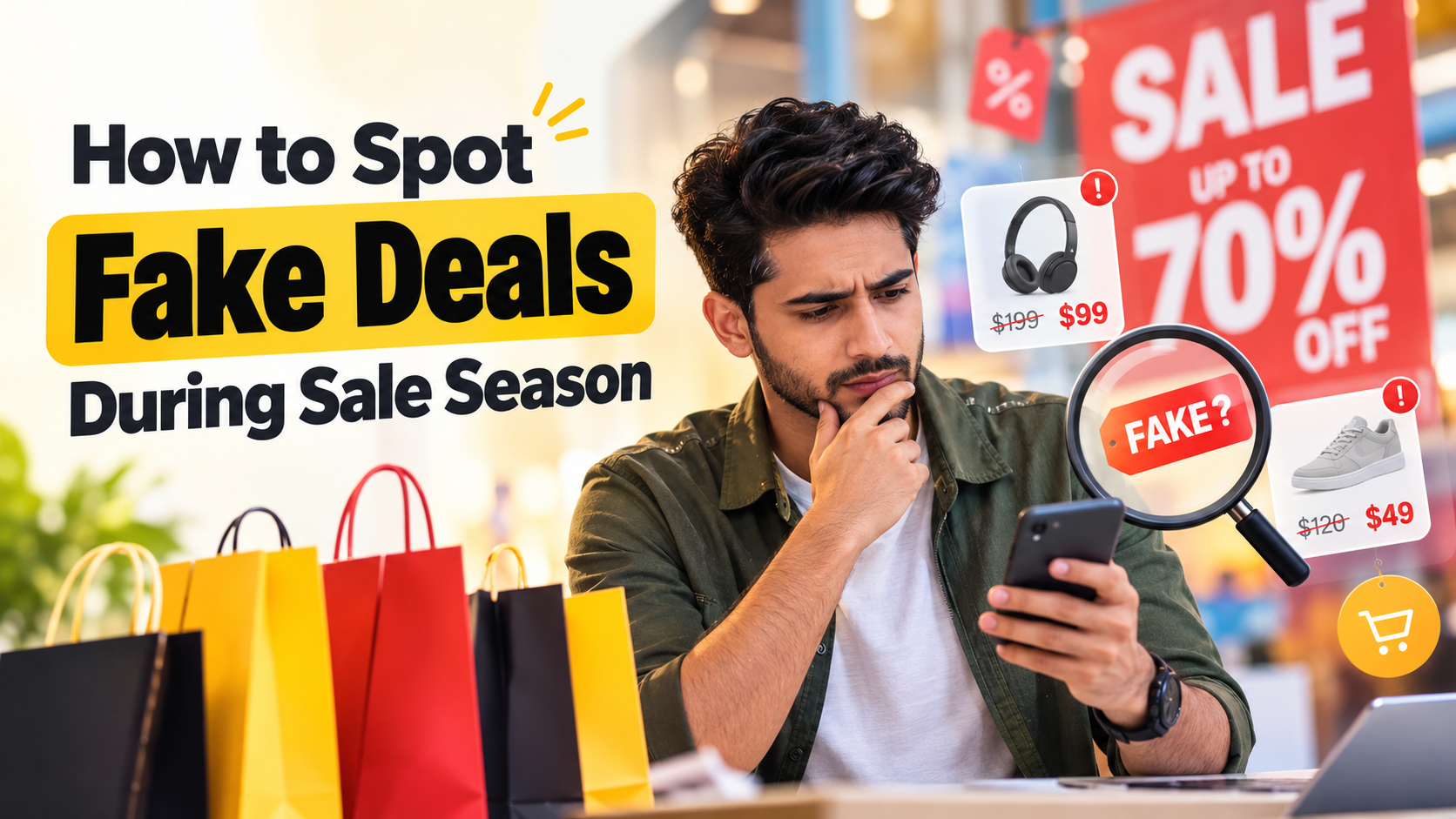
How to Spot Fake Deals During Sale Season
Sale season is one of the best times to save money on everything from electronics and fashion to home appliances and everyday essentials. Major shopping events often bring attractive discounts, exclusive coupon codes, and limited-time offers. However, not every deal is as good as it looks.
Some retailers advertise misleading discounts, inflate original prices, or promote coupon codes that do not work. Others use countdown timers and limited-stock messages to pressure shoppers into making quick decisions.
The good news is that you do not need to be an expert shopper to avoid these traps. By understanding a few common warning signs, you can identify fake deals, compare prices effectively, and make smarter purchasing decisions throughout the sale season.
1. Check the Product's Price History
One of the easiest ways to spot a fake deal is to check whether the advertised discount reflects a genuine price reduction.
For example, a retailer might advertise a product as reduced from $200 to $100, claiming a 50% discount. However, if the product was selling for $110 just a few days earlier, the advertised saving may be misleading.
Before purchasing, compare the current price with prices from other retailers. When available, use price-tracking tools to review historical pricing and identify unusual increases before a sale.
Pro tip: Focus on the price you would actually pay rather than the percentage discount displayed in large letters.
2. Compare Prices Across Multiple Stores
A discount is only valuable when the final price is competitive.
A product advertised at 40% off may still cost more than the same product at another store without a promotional discount. This is particularly common with electronics, branded clothing, household appliances, and popular accessories.
Before placing an order, compare the product's price across at least two or three reputable retailers. Make sure you are comparing the same model, size, specifications, and warranty conditions.
Also, include shipping fees, taxes, and other additional charges in your comparison.
For instance, a product priced at $80 with $15 shipping may be more expensive than an identical product priced at $90 with free shipping.
3. Be Careful With Unrealistic Discounts
Extremely large discounts can be tempting, especially during Black Friday, Cyber Monday, and other major shopping events. However, unusually low prices deserve extra attention.
Be cautious when a retailer offers a newly released smartphone, premium laptop, or branded product at a price significantly below what reputable sellers charge.
This does not automatically mean the offer is fake. Clearance sales, refurbished products, and discontinued models can legitimately sell at substantial discounts. The important thing is to understand why the price is so low.
Check the product condition, seller reputation, warranty coverage, and return policy before making a decision.
If a deal looks too good to be true, take a moment to verify it.
4. Verify Coupon Codes Before Using Them
Coupon codes can help shoppers save money, but not every code advertised online is valid.
Some coupon websites display expired codes, while others list offers that apply only to specific products, customer accounts, or regions. A code might also require a minimum purchase amount or exclude items already on sale.
Before relying on a coupon, check its terms and conditions. Look for expiration dates, eligible products, minimum spending requirements, and restrictions on combining discounts.
Whenever possible, test the code in the retailer's checkout process and confirm that the discount appears before completing your purchase.
Trusted coupon websites that regularly review and update their offers can make this process easier.
5. Recognize Fake Countdown Timers and Urgency Tactics
Messages such as "Only 5 minutes left," "Last chance to save," and "Only 2 items remaining" are common during online sales.
Sometimes these messages reflect genuine stock levels or promotion deadlines. In other cases, they are designed to create pressure and prevent shoppers from comparing prices.
If the same countdown timer resets whenever you revisit a website, treat it as a warning sign.
Do not let artificial urgency replace careful decision-making. Take a moment to research the product, review the seller, and compare the final price before ordering.
A legitimate bargain should still make sense after you have checked the details.
6. Check the Seller's Reputation
Even a genuine discount can become a bad purchase if the seller is unreliable.
Before buying from an unfamiliar online store or marketplace seller, look for independent customer reviews, verified purchase feedback, and a clear business identity.
Pay attention to repeated complaints about counterfeit products, missing deliveries, poor customer service, or refund problems.
Be cautious if a store has no meaningful online presence, uses copied product images, or provides incomplete contact information.
For marketplace purchases, remember that the reputation of the platform does not automatically guarantee the reliability of every individual seller.
Whenever possible, buy from the brand's official store or an authorized retailer, especially for expensive products.
7. Calculate the Real Final Price
A promotional discount does not always mean you are getting the lowest possible price.
Some retailers offer a discount on the product but charge high delivery fees. Others promote a coupon that applies only after you spend more than you originally intended.
To determine whether an offer is worthwhile, calculate the total cost before checkout.
Consider these factors:
Product price after the discount
Shipping and delivery charges
Applicable taxes and fees
Currency conversion or international transaction fees, where relevant
Minimum purchase requirements
Potential return or restocking costs
For example, if you receive a $10 discount but must purchase an additional $30 worth of unnecessary products to qualify, the offer may not represent a meaningful saving.
The best deal is the one that reduces the total cost of something you actually need.
8. Watch Out for Fake Shopping Websites
Sale season also creates opportunities for scammers to imitate legitimate retailers.
Fake shopping websites may copy a brand's logo, product images, and website layout to appear trustworthy. They often advertise unusually low prices to encourage shoppers to pay quickly.
Before entering your payment details, inspect the website address carefully. Look for misspellings, unexpected domain variations, and suspicious links shared through unsolicited messages or social media advertisements.
An HTTPS connection helps protect data in transit, but it does not prove that a website is legitimate.
Check the store's contact information, refund policy, and reputation through independent sources. Avoid websites that demand unusual payment methods, such as direct transfers to unknown individuals or cryptocurrency payments for ordinary retail purchases.
If you suspect a website is fraudulent, do not enter your personal or payment information.
9. Read the Terms and Conditions
Some promotional offers are technically genuine but come with restrictions that make them less attractive than they first appear.
For example, a store might advertise a large discount that applies only to selected sizes, colors, or older product models. Another retailer might offer a coupon that cannot be combined with existing promotions.
Before purchasing, review the offer's conditions, including:
Eligible products and categories
Promotion start and end dates
Minimum order values
Product exclusions
Return and refund eligibility
Warranty and replacement conditions
Understanding these details helps you avoid unexpected charges and disappointment after placing an order.
10. Avoid Buying Something Just Because It Is on Sale
One of the most overlooked shopping mistakes is purchasing something simply because it appears to be a bargain.
A product discounted by 60% does not save you money if you never needed it in the first place.
Before shopping, create a list of essential purchases and establish a realistic budget. When you find an attractive offer, ask yourself whether you would still buy the product at its current price without the discount label.
If the answer is no, consider whether the purchase is genuinely worthwhile.
Smart shopping is not about collecting the largest number of discounts. It is about spending less on products that provide real value.
11. Use Trusted Deal and Coupon Websites
Finding legitimate offers can take time, particularly during major shopping events when thousands of promotions appear online.
Reliable deal and coupon websites can help shoppers discover available discounts, compare offers, and find promotional codes without searching every retailer individually.
However, it is important to choose your sources carefully. Look for websites that provide clear offer details, update expired coupons, explain restrictions, and link directly to the relevant retailer.
Always verify the offer on the retailer's website before purchasing, because prices and promotional terms can change at any time.
When browsing deals on ArabCouponDaily.com, use coupon details and offer conditions to identify promotions relevant to your shopping needs, then confirm the final discount at checkout.
Quick Checklist: Is This Deal Genuine?
Before completing a purchase during sale season, run through this simple checklist:
I have compared the price with other retailers.
I have checked the product's specifications and condition.
The discount appears genuine and the final price is competitive.
The coupon code and its conditions have been verified.
The seller has a credible reputation.
The website address appears legitimate.
Shipping fees, taxes, and additional charges are included in my calculation.
I understand the return policy and warranty conditions.
I am buying the product because I need it, not because of artificial urgency.
If several of these checks raise concerns, investigate further before spending your money.
Final Thoughts
Sale season offers genuine opportunities to save money, but shoppers should not assume that every advertised discount represents the best available price.
By checking price history, comparing retailers, verifying coupon codes, researching sellers, and calculating the total cost, you can avoid misleading promotions and make more informed purchasing decisions.
Remember that the most attractive discount is not necessarily the best deal. A trustworthy seller, a competitive final price, clear terms, and a product that meets your needs are far more important than a large percentage displayed on a banner.
Before your next purchase, take a few minutes to verify the offer. That small step can help you protect your budget, avoid unnecessary purchases, and enjoy a smarter shopping experience throughout the sale season.
Shop smart, verify every deal, and save with confidence.